

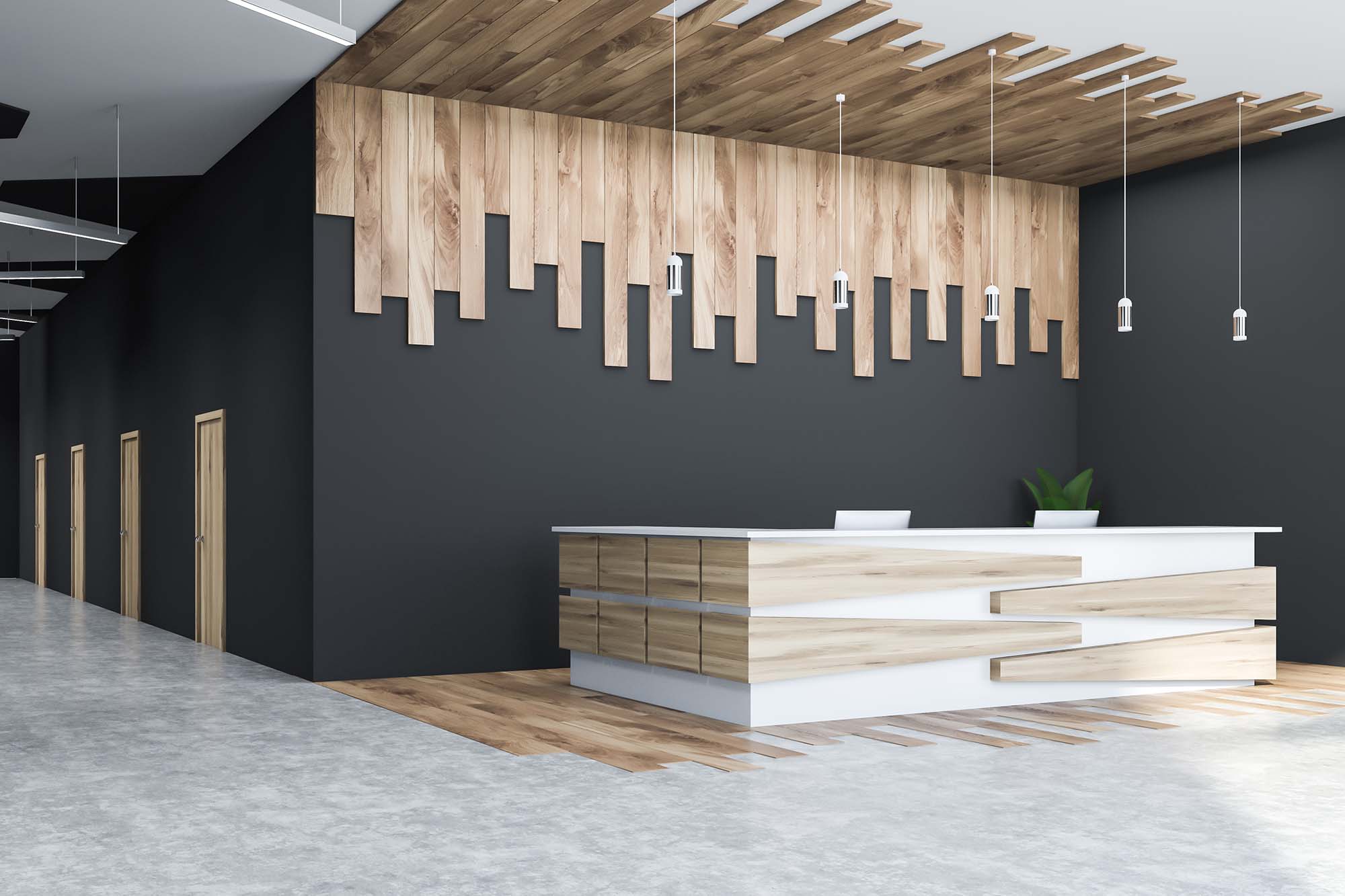
New commercial builds and buildouts across North Texas rarely get a second chance at the flooring decision. Once a retail store or office is open and running, ripping out an underperforming floor means lost business days and a second installation bill. Getting the specification right before ordering material saves both.
Retail Traffic and Office Traffic Wear Floors Differently
A retail floor takes abuse from outside grit carried in on shoes, cart wheels, and constant foot traffic concentrated along the same paths, day after day. That repetitive path wear shows up first at entrances, checkout counters, and fitting room thresholds, exactly where a business cannot afford a worn, dull looking floor greeting every customer who walks in.
Office traffic wears differently. Rolling office chairs create concentrated point pressure that can dent or crush a floor not rated for it, and reception areas see a mix of client foot traffic and furniture that rarely moves. A floor spec that holds up beautifully in a boutique's open floor plan can fail fast under a receptionist's chair rolling across the same six square feet forty times a day.
What Actually Holds Up in Retail Floor Plans
Rigid core waterproof vinyl plank has become the standard recommendation for retail spaces, and for good reason. Its dense core resists denting from rolling clothing racks and display fixtures, its wear layer handles the abrasive grit tracked in from parking lots and sidewalks, and it comes in wood look finishes warm enough to complement a boutique's merchandising without looking industrial.
Commercial grade tile is the other strong contender, particularly for storefronts with heavy water exposure near entrances during rain or for spaces going for a sleek, modern retail look. Polished porcelain tile resists scratching from cart wheels and cleans easily with commercial mopping equipment, though it comes at a higher material and installation cost than rigid core vinyl. The right choice usually comes down to the store's aesthetic direction and how much of the floor sits directly in the entrance splash zone.
What Actually Holds Up in Office and Reception Spaces
Reception areas benefit from a different set of priorities than the open retail floor. A high density core underneath any wood look or stone look finish prevents the compression damage that comes from a desk chair rolling across the same path for years. Commercial carpet tile remains one of the most practical choices for open office floor plans, since damaged tiles can be replaced individually instead of forcing a full floor replacement when one section wears out.
Mixing materials in a single office layout is common and works well when planned intentionally. A wood look rigid core vinyl in the reception and lobby area creates a polished first impression, while carpet tile in individual offices and workstations adds sound absorption that an open plan badly needs. The transition point between the two materials should be planned before either product is ordered, using the same height matching principles that apply to any mixed flooring installation.
Questions to Answer Before You Order Material
A few specification details determine whether a commercial floor performs for a decade or needs replacing within a few years:
What is the expected daily foot traffic count, and does the wear layer or fiber rating actually match it
Will rolling chairs, carts, or fixtures create concentrated point pressure anywhere on the floor
Does any part of the space see regular water exposure from entrances, break rooms, or cleaning protocols
Does the subfloor need leveling or moisture testing before installation, especially in an older or previously occupied space
Answering these before ordering prevents the two most common commercial flooring mistakes: underspecifying the wear layer for the actual traffic, and discovering a subfloor problem after material has already been ordered and cut.
What We Recommend for New Commercial Builds
Popular Flooring Company works with retail and office buildouts across Wichita Falls, Vernon, Iowa Park, Burkburnett, and Henrietta, TX, and we start every commercial project with a walkthrough that maps actual traffic patterns before recommending a product. A showroom sample tells you nothing about how a floor performs under your specific foot traffic, and we would rather spend an extra hour on-site than have a client replace a floor in three years that should have lasted fifteen.
For retail buildouts, our Waterproof and Rigid Core Vinyl line offers commercial grade wear layers built for constant foot traffic and entrance grit. For office and reception spaces, our Commercial Carpet selection includes tile and broadloom options rated for rolling furniture and high traffic corridors.
Get a Commercial Walkthrough Before You Order
Whether you are outfitting a new retail storefront or an office reception area anywhere across Wichita Falls, Vernon, Iowa Park, Burkburnett, and Henrietta, TX, a proper traffic assessment before ordering material is the single best investment you can make in the project. Visit Iowa Park, TX or our Iowa Park showroom to see commercial grade samples in person.
Contact us to schedule a commercial walkthrough and get a flooring specification built around how your space actually gets used.


