

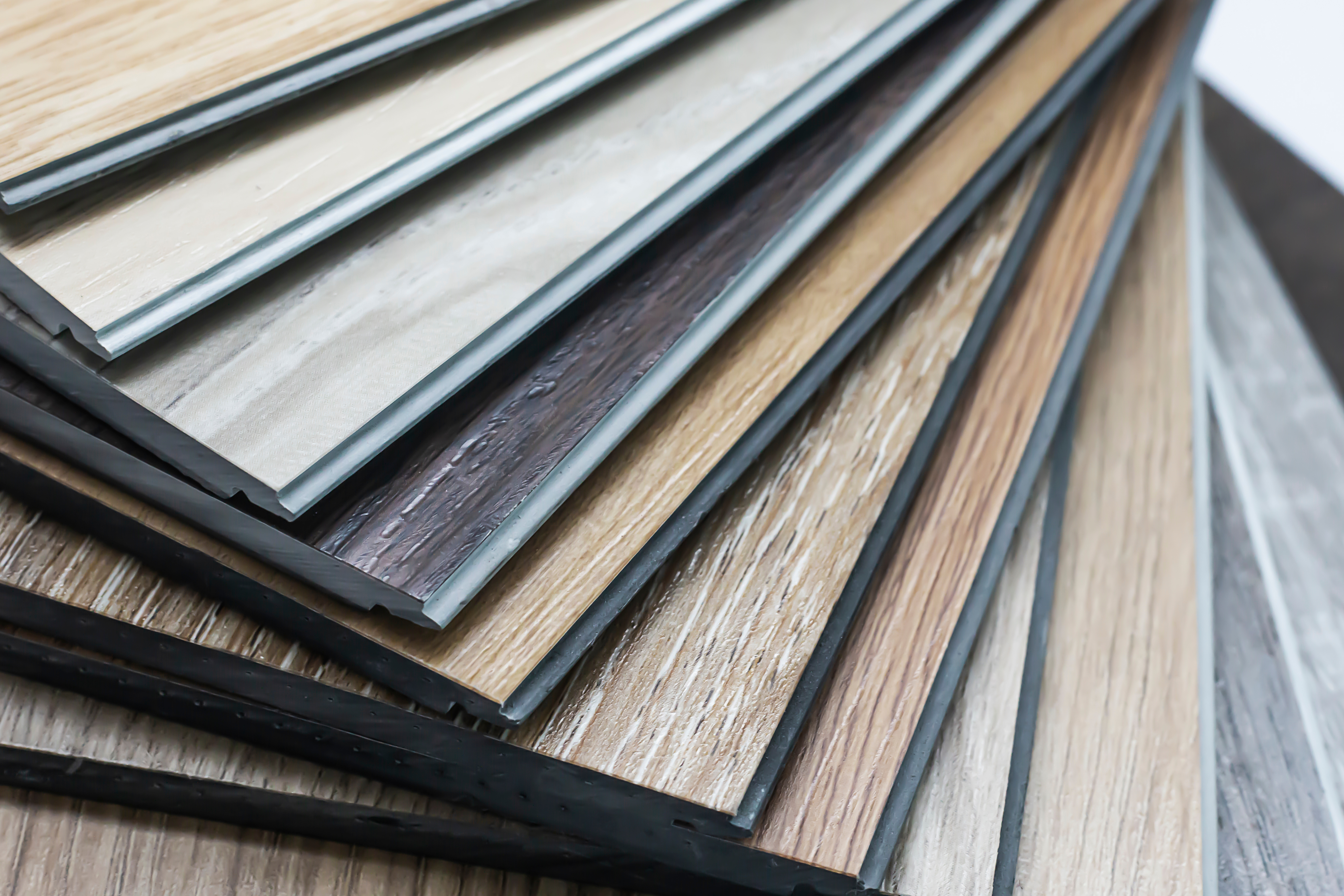
People throw "LVP" around like it's one thing. It isn't. The rigid-core category quietly split into two cores that behave very differently, and if you're flooring a garage conversion, a sunroom, or any space that swings from 60 to 110 degrees, picking the wrong one is an expensive mistake.
Mineral Core Is Why These Planks Are "Rigid"
Older luxury vinyl was flexible and glued down. Modern rigid-core planks click together and float because they're built around a hard mineral or composite core. That core is the whole story, and it comes in two flavors: SPC and WPC.
SPC stands for stone-plastic composite. It's dense, packed with limestone powder, and extremely stable. WPC stands for wood-plastic composite. It uses a foaming agent and wood-flour filler to create a thicker, lighter, softer-feeling board. Both look identical on the showroom floor, which is exactly why so many people choose wrong.
The Heat Problem That Decides It
Every vinyl plank expands and contracts with temperature. The difference is how much. WPC's foamed core has more air and more thermal movement, so in a hot, un-air-conditioned Texas garage it can expand, push against the walls, and peak or buckle at the seams. WPC was designed for climate-controlled living rooms, not 110-degree afternoons.
SPC's dense stone core moves far less. Its lower thermal expansion coefficient means it holds dimension through brutal heat-and-cool cycles, which is precisely what a garage, sunroom, or enclosed patio throws at it. For those spaces, Popular Flooring Company steers customers toward SPC almost every time.
Where Each Core Actually Belongs
The cores aren't "good" and "bad" — they're built for different jobs. Here's the short version we give customers:
SPC: Best for garages, sunrooms, lake houses, basements, and anywhere temperature swings or direct sun are in play. Harder and louder underfoot, but rock-stable.
WPC: Best for bedrooms, living rooms, and other climate-controlled spaces where comfort matters. Warmer, softer, quieter, but not built for heat extremes.
Comfort underfoot is the trade-off. SPC is thinner and firmer, so in a living space we'll often pair it with a quality attached or separate underlayment. In a garage, that firmness is a non-issue.
Installation Details That Make or Break It
Even the right core fails if it's installed like the wrong one. Rigid-core planks still need an expansion gap around the perimeter, typically around a quarter inch, so the floor can move without pushing into the baseboards. In a high-heat room, that gap matters more, not less.
Direct sunlight is the other silent killer. Big garage windows and west-facing sunrooms can superheat a floor's surface well past the air temperature. We check sun exposure, subfloor flatness, and moisture before recommending a product, because the spec sheet only works if the install respects it.
If a salesperson can't tell you whether a plank is SPC or WPC, that's your sign to ask someone who can. Family owned since 1987, Popular Flooring Company keeps both cores in stock and matches them to the actual room you're flooring, not a generic "LVP" pitch.
We proudly serve Wichita Falls, Vernon, Iowa Park, Burkburnett, and Henrietta, TX with free measurements and professional installation from start to finish. Visit Iowa Park, TX to compare cores side by side, and contact us today to book your free estimate.


