

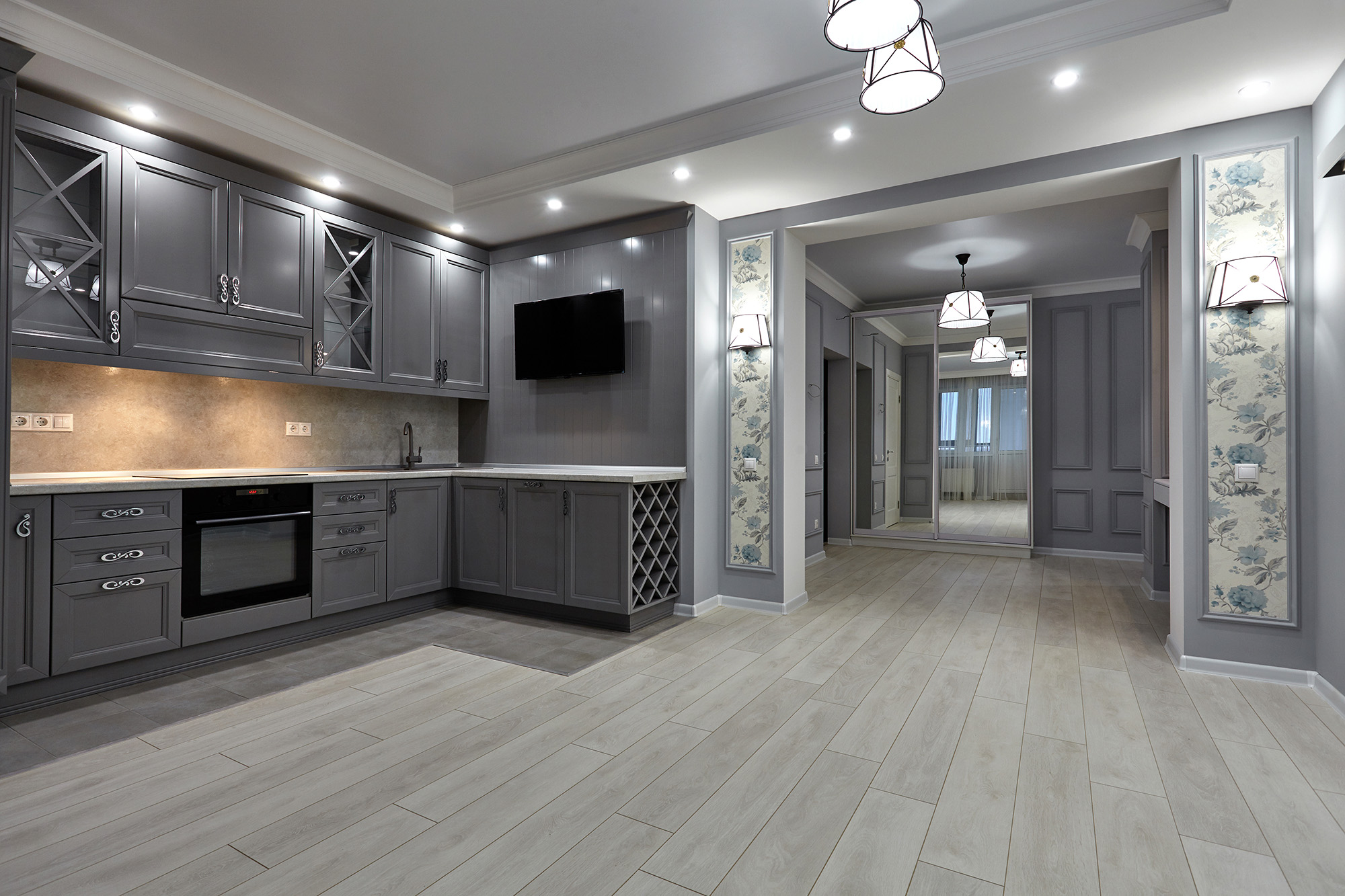
Gray flooring had a long run because it felt clean, modern, and easy to match. The problem is that many cool gray floors now make homes feel colder than intended, especially when paired with white walls, black fixtures, and bright LED lighting. In real homes around Iowa Park, Graham, and Wichita Falls, that can leave living rooms, kitchens, and bedrooms looking flat instead of finished.
The better move is not to swing wildly into orange, red, or overly rustic flooring. A smarter update is to choose warm neutrals, natural wood looks, balanced taupes, soft browns, and muted greige tones that still feel current but are easier to live with. For homeowners comparing laminate, luxury vinyl plank, carpet, and waterproof flooring, the goal is simple: make the home feel warmer, more comfortable, and more intentional without choosing a floor that will feel dated again in five years.
Why cool gray floors are starting to look tired
Cool gray floors often fight with the warmer materials already found in many Texas homes. Brick fireplaces, stained cabinets, leather furniture, stone counters, beige walls, and warm exterior light all tend to look better with flooring that has some natural warmth. When the floor is too blue-gray or washed-out, those finishes can feel disconnected.
The issue becomes even more obvious in open floor plans. A gray plank may look fine in a sample board, but across a kitchen, hallway, and living room, it can make the whole house feel cooler and more echo-prone visually. A floor with light oak, natural hickory, warm beige, soft walnut, or neutral brown undertones usually blends better with existing finishes while still keeping the home updated.
What to choose instead of gray
The safest replacement for gray is not necessarily dark brown. Many homeowners are better served by mid-tone natural wood looks that hide dust, pet hair, crumbs, and everyday traffic. In luxury vinyl plank and laminate, look for colors described as natural oak, blonde oak, honey oak, light hickory, wheat, sand, taupe, or warm beige. These tones work well with white walls, cream walls, tan furniture, black hardware, and mixed metals.
For a more refined look, avoid planks with heavy contrast, exaggerated knots, or sharp black streaks. Those patterns can look busy once installed across a full room. A calmer grain, low-sheen finish, and subtle color variation will usually look more expensive and less artificial. This matters especially with LVP and laminate, where printed visuals and embossing quality can make or break the finished result.
How laminate and LVP fit into the update
Laminate is a strong option when the priority is scratch resistance, realistic wood texture, and a firm feel underfoot. Many modern laminate floors have better surface detail than older products, making them a smart choice for living rooms, bedrooms, dining areas, and hallways. The key is to understand the difference between water-resistant and waterproof-rated products, especially near kitchens, laundry rooms, and entryways.
Luxury vinyl plank is usually the more forgiving choice for homes where spills, pets, wet shoes, and everyday moisture are part of life. Rigid core LVP, including SPC and WPC constructions, can work well over many properly prepared subfloors. SPC tends to feel denser and more impact-resistant, while WPC can feel slightly warmer and softer underfoot. Either way, color selection matters as much as construction if the goal is to move away from dated gray.
Do not forget carpet in the gray floor exit plan
Replacing gray hard flooring does not mean every room needs plank flooring. Carpet still makes sense in bedrooms, media rooms, guest rooms, and spaces where comfort and sound control matter. A warm neutral carpet in oatmeal, mushroom, soft beige, or warm taupe can make bedrooms feel more restful while balancing harder surfaces elsewhere in the home.
Carpet also helps reduce noise in homes with open layouts, pets, children, or second-floor rooms. The important technical choices are fiber type, pile height, density, twist level, and pad quality. A dense, low-to-medium pile carpet with a quality pad will usually hold its shape better than a soft but loosely constructed carpet that crushes quickly in traffic lanes.
How to avoid picking another trend that ages badly
A good floor should support the home, not shout over it. If the plank color only works with one exact wall color or one furniture style, it may be too trend-driven. Samples should be checked in morning light, afternoon light, and artificial light because warm flooring can look very different throughout the day.
It also helps to compare flooring against the fixed finishes that are staying in place. Cabinets, countertops, trim, fireplace stone, doors, and major furniture pieces should all be considered before choosing a color. A floor that connects two or three existing elements will usually look more intentional than one chosen from a showroom display alone.
A gray floor update is less about chasing a new trend and more about restoring warmth, balance, and livability. For many homes, the best answer will be a natural-looking LVP, a warmer laminate, a comfort-focused carpet, or a waterproof flooring option selected around the way the home is actually used.
For help choosing flooring that fits your home, visit Iowa Park, TX for Popular Flooring Company in Iowa Park, TX. The team serves Wichita Falls, Vernon, Iowa Park, Burkburnett, and Henrietta, TX and can help compare laminate, luxury vinyl plank, carpet, and waterproof flooring options for your space. When you are ready to narrow down colors, materials, and installation details, contact us to get started.


